


 Iron-on patches, (also known as heat sealers), possess a special kind of backing that allows a bond to be formed between the patch and its fabric upon heating. Luckily for you, most of these patches can be attached to garments using your simple home iron. In some cases, however, proper conditions are required, such as sufficient time, temperature and pressure. This will ensure the patch seals correctly. You can do this using a heat seal machine, which you’ll find at most local sports stores.
What exactly can these iron-on patches offer?
The heat seal backing that accompanies these patches adds some stiffness, letting them lie flat. They’re ideal for decorating casual clothing and can be easy to apply. People may use these patches for a multitude of reasons, whether it’s for fashion or costume designing, merchandise production, simple wardrobe wear or garments that need to be decorated in a short amount of time. They’re relatively cheap and easy to source and can serve their purpose excellently.
 There are, however, a few disadvantages.

Iron-on patches can only provide you with temporary security. They don’t last too long, and with each and every wash, their lifeline reduces even more so. If placed on sportswear, the physical patch will be disturbed frequently, affecting the bond that had been previously created. Therefore, it’s recommended that you avoid using iron-on patches with this type of clothing. Additionally, heat seals will not work with synthetic or elastic fabrics such as nylon, which can prove to be a slight inconvenience.
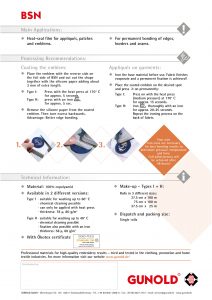
Some companies, claim their patches last 50-80 washes, due to their usage of robust adhesives. Others, however, roughly last 20-30 washes, which certainly isn’t ideal for clothing that’s worn frequently. If you’re planning on getting lots of wear out of a certain piece, perhaps consider using a different method of application. Here at Patchion we use Thermofoil Heat activated manufactured by Gunold called Permanent Heat-Seal Film. The professional iron on backing makes every patch extremely durable, even edges and borders will not come off.
Quotation Form
So, how can you apply a heat seal patch?
A needle and thread is a great way to begin – when applying the heat seal, some prefer to sew in a few stitches beforehand, holding the patch in the right place and reducing risk of peeling.
Before you begin, make sure not to use fabrics that are easily damaged by heat. You should always carry out a test beforehand if you are doubtful.
Let’s get started.
1) Using your iron, set the temperature setting to ‘cotton’ or ‘high heat’.
2) Lay out your desired garment, preferably on an ironing board.
3) Preheat the area of the garment where you plan on attaching the patch. Put some cheap cloth between the iron and garment for protection. Next, press the iron firmly on top of the cloth for around ten seconds.
4) Lay your patch on the spot you just heated. Put your cheap cloth on top of the embroidered part of your patch, in order to avoid burning the thread. Then, hold and press for a maximum of twenty seconds.
5) If you can, repeat this but on the opposite side of the clothing. Keep on using that cheap cloth for protection.
6) Although your glue will be extremely hot and liquefied, it will cool down and harden in little time. Therefore, it’s vital you don’t allow the patch to move or slide about before the glue cools. And if it does, the bond will be less secure.
7) Finally, put your fabric aside and let it cool to room temperature.
Now you know how to apply patches with an iron, how could you do the same with a commercial heat press machine?
1) First of all, you need to preheat your garment to around 325-400 degrees, depending on its type.
2) Place your patch on the preheated section.
3) Heat the patch at the same temperature listed above and with medium pressure, for a maximum of twenty seconds.
4) If you can, repeat this method on the opposite side of the garment.
5) As previously mentioned, the glue will be hot but will cool quickly. Make sure not to move the patch.
6) Put the piece of fabric to one side and allow it to cool to room temperature.
Other popular types of backing include plastic, (which adds stiffness and support), adhesive, (non-permanent and better for a single event), hook-sided velcro, (commonly used with military applications), two-sided velcro, (ideal for garments without a loop fastener area ), or no backing at all.
Hopefully, this article has given you a brief insight into iron-on patches. So, why don’t you try them for yourself?
Contact us today for top quality custom embroidered patches and badges with iron on backing. Provide image/logo today. Get products ready within 2 weeks. We offer fast Europe delivery and worldwide shipping. Fill up the form and receive quotation within 2 hours (during UK business days).


